
It’s another beautiful morning, and you wake up with a sense of excitement and anticipation for the day ahead. But as you swing your legs over the edge of the bed and attempt to stand up, a sharp, nagging pain shoots through your lower back, instantly dampening your spirits. Chronic lower back pain has a way of turning even the simplest tasks into daunting challenges, robbing you of the joy and freedom you deserve.
You’re not alone. In fact, chronic lower back pain affects millions of people worldwide, becoming a constant companion that hinders daily activities and diminishes overall well-being. The quest for relief often leads us down a winding road of conventional treatments and temporary solutions, leaving us yearning for something more holistic, sustainable, and transformative. While there are various treatment options available, incorporating yoga into your daily routine can offer holistic benefits for managing and alleviating lower back pain.
Yoga is an ancient practice that holds the key to nurturing your lower back, alleviating pain, and reclaiming a stronger, healthier life. In this blog post, we will embark on a journey of exploration, delving into specific yoga poses and techniques tailored to target your lower back with precision. We will unravel the secrets of proper alignment, modifications for individual needs, and the art of integrating mindfulness and breathwork into your practice. And, most importantly, we will guide you on a path of consistency and progress tracking, empowering you to chart your course towards a pain-free and vibrant existence.
So, let’s leave behind the days of aching discomfort and embrace the promise of a nurtured lower back. Together, we will unlock the transformative power of yoga, where each breath, each movement, and each moment of mindfulness becomes a step towards a stronger, healthier, and pain-free you.
Yoga Poses for the Lower Back pain relief:
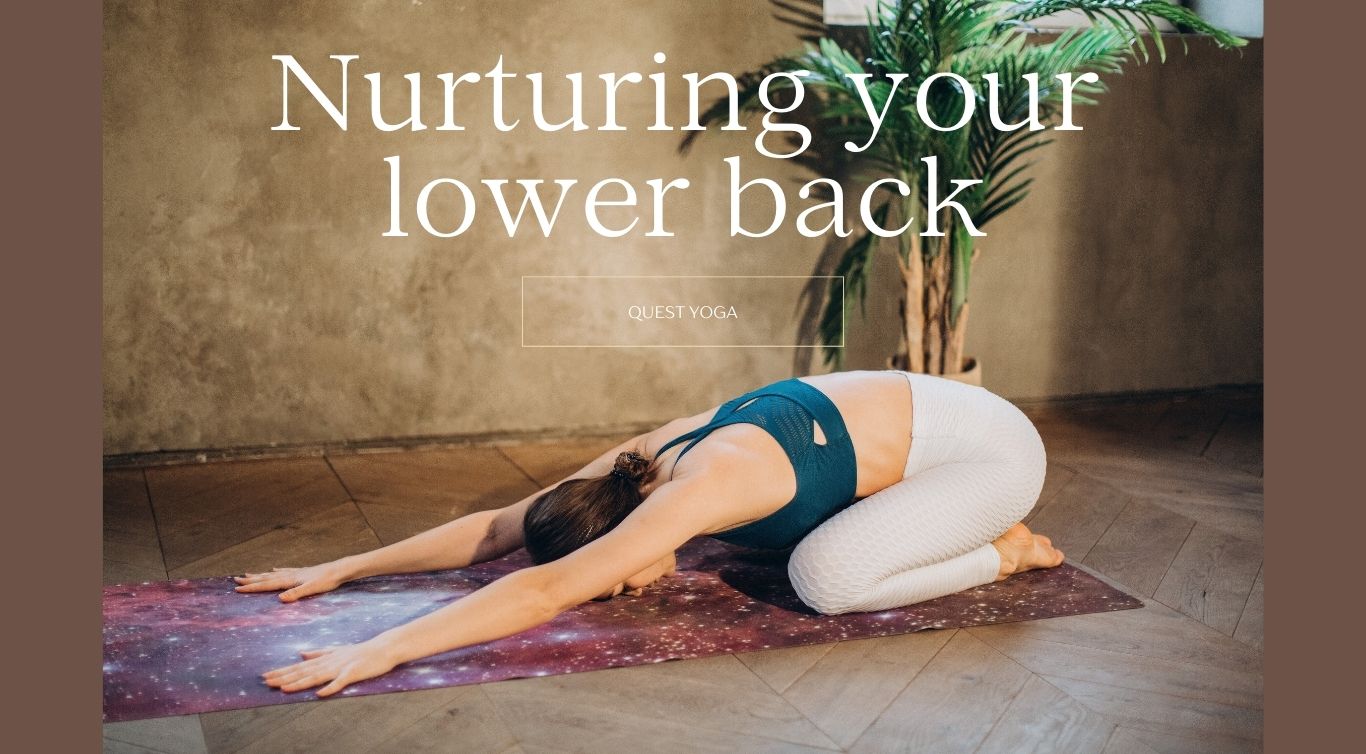
- Child’s Pose (Balasana): This gentle resting pose stretches the lower back, hips, and thighs, providing relief from tension and tightness.
- Cat-Cow Pose (Marjaryasana-Bitilasana): This dynamic movement sequence helps improve spinal flexibility and mobility while gently massaging the lower back.
- Downward-Facing Dog (Adho Mukha Svanasana): This pose stretches and strengthens the entire back, promoting a healthy spine and relieving lower back discomfort.
- Sphinx Pose (Salamba Bhujangasana): By gently opening the chest and elongating the spine, Sphinx Pose helps alleviate lower back pain caused by poor posture.
- Supine Twist (Supta Matsyendrasana): This twist releases tension in the lower back and improves spinal mobility, providing a soothing effect.
Yoga Poses to strengthen the lower back:
- Bridge Pose (Setu Bandhasana): This pose targets the lower back, glutes, and hamstrings, strengthening the muscles that support the spine.
- Locust Pose (Salabhasana): Locust Pose helps strengthen the lower back muscles, improving posture and relieving tension in the area.
- Extended Triangle Pose (Utthita Trikonasana): This standing pose stretches and strengthens the muscles in the legs, hips, and lower back, promoting stability and balance.
- Cobra Pose (Bhujangasana): Cobra Pose strengthens the muscles along the spine, including the lower back, while improving flexibility and relieving stiffness.
- Chair Pose (Utkatasana): Chair Pose engages the core and lower back muscles, promoting stability and strength throughout the entire back.
Step-by- step instruction for asana practice:
Here are brief instructions on how to perform each pose correctly, along with modifications and variations:
- Child’s Pose (Balasana):
- Start on your hands and knees, bringing your big toes together and knees hip-width apart.
- Sit back on your heels, lowering your torso between your thighs.
- Extend your arms forward or alongside your body, palms facing down.
- Modification: If you have difficulty sitting on your heels, place a bolster or folded blanket under your torso for support.
- Cat-Cow Pose (Marjaryasana-Bitilasana):
- Begin on your hands and knees, aligning your wrists under your shoulders and knees under your hips.
- Inhale, arch your back, lift your chest and tailbone, and gaze upward (Cow Pose).
- Exhale, round your spine, tuck your chin to your chest, and engage your abdominal muscles (Cat Pose).
- Modification: Place a blanket under your knees for extra support or perform the movements while seated in a chair.
- Downward-Facing Dog (Adho Mukha Svanasana):
- Start on your hands and knees, then lift your knees off the ground, pressing your hips up and back.
- Straighten your arms and legs, creating an inverted “V” shape with your body.
- Press your palms into the ground, spread your fingers wide, and engage your core.
- Modification: Bend your knees slightly if you have tight hamstrings or place your hands on blocks for added support.
- Sphinx Pose (Salamba Bhujangasana):
- Lie face down on your mat, placing your forearms on the ground, elbows under your shoulders.
- Press your forearms into the mat, lifting your chest and upper body while keeping your hips and legs relaxed.
- Gently draw your shoulder blades down and back, lengthening your spine.
- Modification: Place a bolster or folded blanket under your forearms for additional support.
- Supine Twist (Supta Matsyendrasana):
- Lie on your back with your arms extended out to the sides, palms facing down.
- Bend your knees and bring them towards your chest.
- Lower both knees to one side, keeping your shoulders grounded.
- Turn your head in the opposite direction of your knees.
- Modification: Place a bolster or folded blanket between your knees for support or perform the twist with bent knees.
- Bridge Pose (Setu Bandhasana):
- Lie on your back with your knees bent and feet hip-width apart, close to your glutes.
- Press your feet into the ground, engage your glutes, and lift your hips off the mat.
- Interlace your fingers under your back and roll your shoulders underneath you.
- Modification: Place a block under your sacrum for support or perform a supported bridge pose with a bolster under your hips.
- Locust Pose (Salabhasana):
- Lie on your stomach with your arms alongside your body, palms facing down.
- Lift your head, chest, arms, and legs off the mat, keeping your gaze forward.
- Engage your glutes, lower back, and shoulder muscles.
- Modification: Keep your legs and chest on the ground, focusing on lifting just your upper body or one leg at a time.
- Extended Triangle Pose (Utthita Trikonasana):
- Stand with your feet wide apart, one foot turned out and the other slightly turned in.
- Extend your arms to the sides parallel to the ground.
- Hinge at your hip and reach forward with one hand while keeping your spine long.
- Place your hand on your shin, ankle, or a block, and extend your other arm upward.
- Modification: Use a block to support your bottom hand or perform the pose with a wider stance for better balance.
- Cobra Pose (Bhujangasana):
- Lie on your stomach, placing your hands under your shoulders, elbows tucked close to your body.
- Press your palms into the mat, lift your chest, and straighten your arms.
- Keep your shoulders down and away from your ears, while maintaining a gentle engagement of your lower back.
- Modification: Perform a sphinx pose with forearms on the mat or a baby cobra by lifting just your head and shoulders.
- Chair Pose (Utkatasana):
- Stand with your feet together or hip-width apart.
- Extend your arms forward, parallel to the ground, or bring your palms together at your heart.
- Bend your knees, as if sitting back into an imaginary chair, keeping your weight in your heels.
- Engage your core and lengthen your spine.
- Modification: Place a block between your thighs or perform the pose with your back against a wall for support.
Proper Alignment and Modifications:
Remember, it’s important to listen to your body and make adjustments as needed. These modifications and variations will help you adapt the poses to your level of flexibility and physical abilities, ensuring a safe and effective practice.
a. Engage the Core: Activating the core muscles helps support the lower back and maintain proper alignment during yoga poses, reducing the risk of strain or injury.
b. Modify Intensity: If you experience discomfort or pain during a pose, use props such as blankets, bolsters, or blocks to modify the intensity and ensure proper alignment.
c. Listen to Your Body: Each person’s body is unique, so it’s essential to pay attention to your body’s signals. Avoid pushing beyond your limits and honor any sensations of discomfort or pain.
Mindfulness and Breathwork Integration:
Mindfulness and breathwork play a crucial role in managing chronic lower back pain by promoting relaxation, reducing stress, and enhancing body awareness.
Benefits of Mindfulness in Managing Chronic Lower Back Pain:
- Increased Body Awareness: Mindfulness helps you tune into your body’s sensations, allowing you to identify areas of tension, discomfort, or pain in your lower back.
- Pain Management: By cultivating a non-judgmental and accepting attitude towards pain, mindfulness can help you develop a more compassionate relationship with your body and reduce the intensity of pain sensations.
- Stress Reduction: Chronic pain often leads to stress and anxiety. Mindfulness practices can help alleviate stress by activating the relaxation response and promoting a sense of calm and well-being.
- Improved Posture and Alignment: Mindfulness enhances your ability to notice and correct postural imbalances, allowing you to maintain proper alignment and relieve strain on the lower back.
Instructions for Incorporating Mindfulness in Yoga Sessions:
- Body Scan: Start your yoga session by performing a body scan. Close your eyes, bring your attention to your lower back, and scan your body from head to toe. Notice any sensations or areas of tension in your lower back and set an intention to bring awareness and compassion to that area.
- Sensory Awareness: During each yoga pose, direct your attention to the physical sensations in your lower back. Observe the quality of the sensations, whether they are tight, tense, or relaxed. Avoid judging or labelling the sensations as good or bad.
- Gentle Exploration: As you move through each pose, explore the range of motion and find the edge of your comfort zone without pushing into pain. Notice any subtle shifts or changes in sensation, allowing yourself to find a balance between effort and ease.
Benefits of Breathwork in Managing Chronic Lower Back Pain:
- Relaxation Response: Deep, diaphragmatic breathing activates the parasympathetic nervous system, triggering the relaxation response and reducing muscle tension in the lower back.
- Pain Modulation: Focused breathing techniques can help modulate pain signals by redirecting your attention away from the pain and promoting a sense of calm.
- Improved Oxygenation: Deep breathing increases oxygen intake, enhancing blood circulation and nourishing the muscles, ligaments, and tissues in the lower back.
Recommendations for Consistency and Progress Tracking:
a. Establish a Routine: Designate specific times for your yoga practice and make it a non-negotiable part of your daily or weekly schedule.
b. Start Slowly: If you’re new to yoga or experiencing severe lower back pain, begin with shorter practice sessions and gradually increase the duration and intensity over time.
c. Gradual progression: it is importance to focus on gradual progression and the need to listen to one’s body to avoid overexertion.
d. Keep a Journal: Maintain a yoga journal or take photos to track your progress, note any changes in pain levels or flexibility, and celebrate achievements along the way.
e. Seek Guidance: Consider working with a qualified yoga instructor or therapist specializing in lower back pain to receive personalized guidance and support.
In conclusion, chronic lower back pain can be effectively managed and relieved through the practice of yoga. By incorporating specific yoga poses, proper alignment techniques, mindfulness, breathwork, and consistency in your daily routine, you can proactively nurture and strengthen your lower back, fostering a healthier and pain-free life.
Throughout this blog post, we explored a variety of yoga poses and sequences that target the lower back, providing relief from tension and promoting strength. From gentle poses like Child’s Pose and Sphinx Pose to more dynamic movements like Cat-Cow Pose and Downward-Facing Dog, each pose offers unique benefits for your lower back.
We also discussed the importance of proper alignment and modifications, emphasizing the need to engage the core and listen to your body’s signals. By modifying the intensity of poses and using props when necessary, you can ensure that your practice is safe and supportive, regardless of your flexibility or physical abilities.
Moreover, we delved into the significant role of mindfulness and breathwork in managing chronic lower back pain. By cultivating mindfulness, you can develop a deeper awareness of your body’s sensations, manage pain, reduce stress, and improve posture. Incorporating specific breathing techniques such as diaphragmatic breathing and synchronized breathwork further enhances relaxation, oxygenation, and pain modulation.
To maintain consistency and track your progress, we provided recommendations such as establishing a routine, starting slowly, keeping a yoga journal, and seeking professional guidance when needed. These practices can empower you to stay committed, measure your achievements, and make necessary adjustments along your journey to a healthier lower back.
Yoga offers a holistic approach that not only targets the physical aspects of chronic lower back pain but also nurtures the mind-body connection. By embracing the power of yoga, you have the opportunity to transform your relationship with pain, cultivate resilience, and embark on a path toward a stronger, healthier, and pain-free lower back.
Remember, as with any new practice, it’s important to listen to your body, make modifications as needed, and seek professional guidance if necessary. Trust in the process, be patient with yourself, and celebrate each step you take towards nurturing your lower back through the practice of yoga.
Start your journey today and experience the transformative potential of yoga in managing chronic lower back pain. Your lower back deserves the care, attention, and strength that yoga can provide. Embrace this powerful tool and reclaim your well-being, one pose at a time.
#ChronicBackPainRelief #YogaForHealing #HolisticHealthJourney #MindBodyConnection #PainManagementSolutions #YogaTherapyBenefits #LowerBackPainRelief #WellnessJourney #YogaBenefits #PainFreeLiving
 QUEST YOGA